Answer first
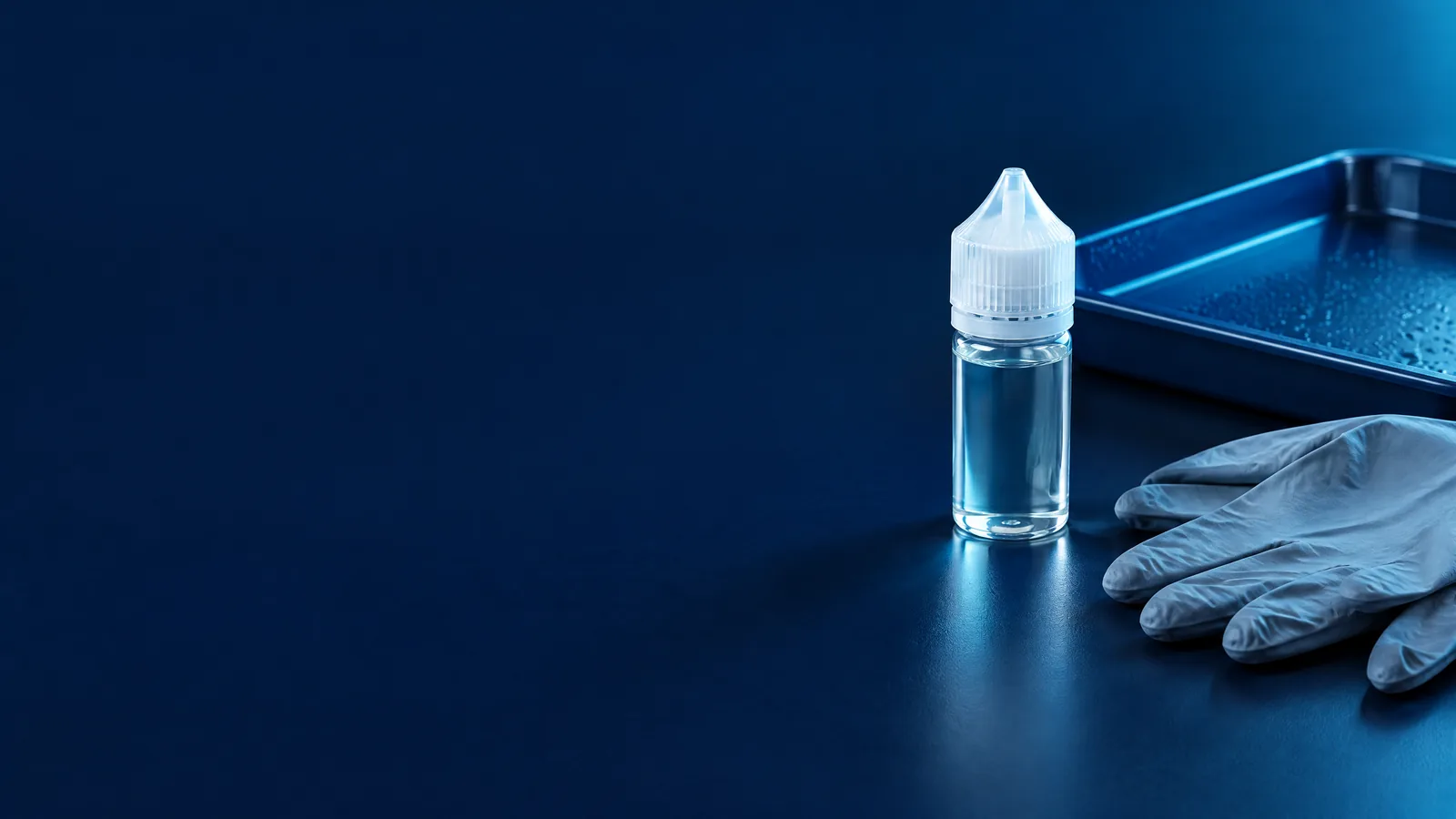
Vaping liquid that contains nicotine is poisonous. Health Canada says even small amounts can be very harmful if swallowed or absorbed through the skin. The essential safety routine is to keep every bottle securely closed, out of sight and reach of children and pets; handle liquid with care, washing hands immediately afterward or using gloves; keep it in a cool, dry location away from food, drinks and medicine; and use the product label and professional help—not guesswork—if an exposure occurs.1
If someone swallows vaping liquid, Health Canada says to seek emergency medical attention or call 9-1-1 or a Poison Control Centre at 1-844-POISON-X (1-844-764-7669).1 If you think someone has been harmed by an exposure, Health Canada’s household-chemical guidance says to call a poison centre or health-care provider right away, tell them what the label says and bring the container when seeking help.2
KEY TAKEAWAYS
- Nicotine vaping liquid can be harmful if swallowed or absorbed through the skin; keep it out of sight and reach of children and pets.1
- Wash hands immediately after handling liquid or wear gloves; never mix household chemical products or additives into vaping liquid.1
- A child-resistant closure is not child-proof. Close the container securely after every use, even if it is only set down briefly.12
- Store the original, closed container in a cool, dry place where it cannot be confused with food, drinks or medicine.1
- For swallowing or a suspected harmful exposure, follow the label and seek prompt professional direction rather than attempting a home remedy.12
General safety information only. This article does not replace a product label, emergency services, poison-control guidance, medical advice, local disposal requirements or qualified professional advice.
Why vaping-liquid safety deserves its own routine
The device and the liquid create different safety questions. A battery-powered device requires careful charging, storage and transport. Vaping liquid requires a separate routine because it can contain nicotine, must be handled and stored as a potentially hazardous liquid, and can be confused with common household items if kept carelessly.
Health Canada’s vaping-product safety page is direct: nicotine-containing vaping liquid is poisonous, and even small amounts can be harmful if swallowed or absorbed through the skin.1 Young children are more susceptible to harm from nicotine, which is why storage, container closure and clear product identification matter every time a bottle is handled.1
This guide does not give a dose threshold, diagnose an exposure or replace first-aid instructions printed on the actual product. Its purpose is to make official safety guidance easy to find before an avoidable mistake occurs.
Store vape liquid so it cannot be confused with food, drinks or medicine
| Storage check | Safer practice | Official basis |
|---|---|---|
| Container | Keep the original container securely closed after each use | Child-resistant does not mean child-proof; close it securely.1 |
| Location | Put it out of sight and reach of children and pets | Health Canada vaping-liquid guidance.1 |
| Environment | Choose a cool, dry location | Health Canada vaping-liquid guidance.1 |
| Separation | Keep it distinct from food, drinks and medicine | Reduces confusion with household consumables.1 |
| Condition | Check containers for leaks or damage and retain safety information | General Health Canada household-chemical guidance.2 |
Do not decant vaping liquid into food containers, drink bottles or unlabelled containers. The product label contains the ingredients, hazard symbol and first-aid statement that can be needed quickly if something goes wrong. Health Canada says legal vaping products with nicotine must include toxicity information such as a hazard symbol and a first-aid treatment statement.1
Handle nicotine vaping liquid deliberately, not casually
What not to mix into a vaping liquid
Do not add household chemical products or additives that the manufacturer did not intend for the product. Health Canada explicitly says never to mix household chemical products or additives into vaping liquid.1 A product of unknown composition or one altered outside manufacturer instructions cannot be treated as the same product that was packaged and labelled.
Health Canada also advises people not to use vaping products of unknown content or origin and says it is not recommended to modify vaping products or add substances to vaping liquids that are not intended by the manufacturer.1 For a trade team, that supports keeping specifications, lots and packaging records together rather than treating an unlabelled bottle or altered liquid as interchangeable stock.
Keep a stable handling zone
A handling area should be clear of food and drink, have enough light to read the label and allow the cap to be closed immediately. This is a practical application of Health Canada’s instructions to store liquid away from food, drinks and medicine and to close child-resistant containers securely after each use.1
What to do if vaping liquid is spilled
For a spill, focus first on preventing contact and confusion. Keep children and pets away from the area, secure the container if you can do so without creating more contact, and read the exact product label for first-aid and hazard information. Health Canada advises using recommended protective equipment described on a product label and washing hands with soap and water after using a product; its vaping guidance specifically says to wash hands immediately after handling vaping liquid or wear gloves.12
Do not mix another household chemical into the liquid or try to neutralize it with a household product. Health Canada advises never mixing household chemical products together and specifically says never to mix household chemical products or additives into vaping liquid.12
| Situation | Safer next step |
|---|---|
| A closed bottle leaks or is damaged | Keep the item away from children and pets; retain the label and check manufacturer instructions. Do not use a damaged or unidentified container. |
| Liquid contacts skin | Follow the first-aid statement on the product label. Because nicotine can be harmful when absorbed through skin, seek professional direction if you think someone may have been harmed.12 |
| Liquid reaches eyes, is swallowed or someone appears unwell | Treat as an exposure concern: follow the label and seek prompt emergency, poison-centre or health-care guidance. For swallowing, Health Canada says to seek emergency medical attention or call 9-1-1 or 1-844-POISON-X.1 |
| Spill is near food, drinks, medicine or a child-accessible surface | Keep people and pets away, preserve container information and use professional guidance if there is a suspected harmful exposure. |
This article intentionally does not prescribe a one-size-fits-all cleanup technique. The product label, formulation, location and whether anyone has been exposed matter. The most reliable information is on the exact container and from the appropriate health or poison-control service.
Accidental exposure: use the label and get professional help early
Accidental exposure is not the same as a routine handling question. If someone has swallowed vaping liquid, Health Canada says to seek emergency medical attention or call 9-1-1 or a Poison Control Centre at 1-844-POISON-X (1-844-764-7669).1 For a suspected harmful exposure to a household chemical product, Health Canada says to call a poison centre or health-care provider right away, communicate what the product label says and bring the container when going for help.2
Information to have ready
- Product name and brand. Use the original container or package when safe to do so.
- Nicotine concentration on the label. Record what is displayed; do not estimate a concentration.
- First-aid statement and hazard information. Read exactly what the product label says.
- What happened and when. Communicate the facts without guessing at a cause.
- Container or clear label photo. Keep it available if safe to provide to professionals.
Do not delay an urgent call while trying to calculate an amount or search for an answer online. This guide is a pre-incident reference, not a replacement for individual medical advice or emergency response.
How to recognise a label that supports safer handling
Health Canada says every legal vaping product with nicotine at a concentration of 0.1 mg/mL or more must be enclosed in child-proof packaging. It also says that legal labels must show ingredients and, when nicotine is present, a nicotine concentration statement in mg/mL, toxicity information including a hazard symbol and first-aid treatment statement, and a nicotine health warning in English and French.1
These are important safety cues, but they are not a guarantee that a product is safe to handle casually. A child-resistant closure does not mean child-proof, and a label does not replace safe storage. Treat the label as a source of specific information to use if an incident occurs.
For a deeper overview of Canadian package and label controls, see Solvane’s vaping-product labelling and packaging checklist.
When to report a product-safety concern
If you notice a safety problem with a vaping device or vaping liquid, Health Canada says you can report it to the manufacturer or retailer and through the consumer-product safety online reporting page.1 This is distinct from a poison-centre or emergency call: emergency and health-care support address immediate care, while product-safety reporting documents a product concern.
A useful report is factual. Record the product name, retailer or manufacturer, identifiers or lot information, what occurred, any damage or injury and supporting photographs where safe. Do not modify the product to investigate it. If the item is named in an official recall, follow the exact recall notice. Solvane’s vape recall checklist for Canada explains how to match an item to a published notice and prevent redistribution.
What verified trade teams should keep on file
For a B2B program, safer consumer information starts with traceability. Product records should tie a vaping-liquid formula and specification to the correct label, bilingual warning and first-aid statement, child-resistant closure, lot or batch record, distribution route and complaint or incident contact path.
This does not replace the responsibilities of manufacturers, importers, distributors or retailers under applicable law. It gives a trade team a more reliable way to identify the exact product when a customer question, quality concern or recall arises. The related VPRR responsibility map and Canada Compliance Center provide additional trade context.
Frequently asked questions
Can nicotine vaping liquid be absorbed through skin?
Health Canada says nicotine vaping liquid can be harmful if absorbed through skin. It advises washing hands immediately after handling vaping liquid or wearing gloves. Follow the product label and seek professional direction if you think someone may have been harmed.1
What should I do if someone swallows vaping liquid in Canada?
Health Canada says to seek emergency medical attention or call 9-1-1 or a Poison Control Centre at 1-844-POISON-X (1-844-764-7669). Keep the product container or label information available for professionals.1
Can I keep vape liquid in a fridge, drink bottle or another container?
Keep vaping liquid in its original, securely closed container. Health Canada says to store it in a cool, dry place where it cannot be confused with food, drinks or medicine. A product label contains important ingredient, hazard and first-aid information.1
Does child-resistant packaging mean a child cannot open the product?
No. Health Canada says child-resistant does not mean child-proof. Close the container securely after every use and store it out of sight and reach of children and pets.12
Should I report a vaping-liquid safety issue even if no one was hurt?
Health Canada says a safety problem with a vaping device or vaping liquid can be reported to the manufacturer or retailer and through the consumer-product safety online reporting page. If there is an urgent exposure concern, seek emergency or poison-centre direction first.1
Official sources
- Health Canada — Vaping product safety, page date 4 June 2026; reviewed 2 October 2026.
- Health Canada — Use household chemicals safely, page date 20 February 2024; reviewed 2 October 2026.
- Government of Canada — Find recalls, advisories and safety alerts, date modified 1 October 2026; reviewed 2 October 2026.